
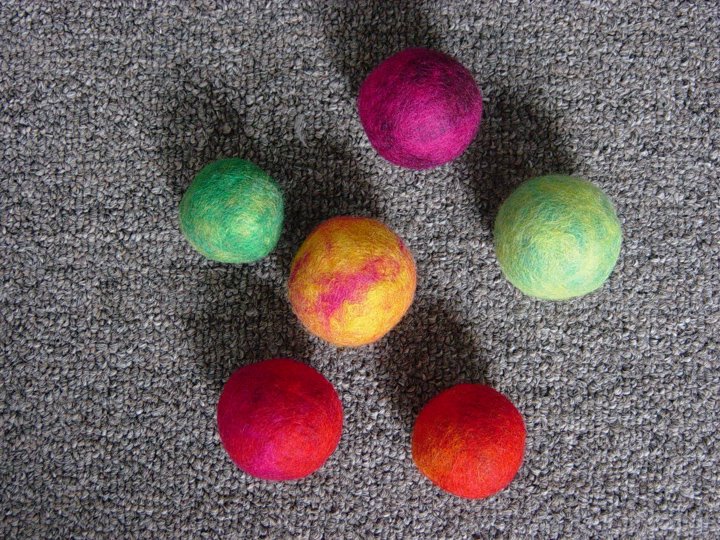
 To make the ornaments shown in Quilting Arts Gifts, you need to make felted wool balls or you can buy pre-felted balls from the Artgirlz or Quilting Arts. I like to make felted balls myself because I can have fun playing with colors and shapes. How to make the felted balls is explained in the article, but it does not have photos with all the steps. So, for all you visual learners here's how I do it.
Warning: once you start making these it will be really hard to stop.
This is a great way to use up leftover yarn, by rolling golf ball size yarn balls as a base for the ball. Wind yarn into oblong shapes to get a berry shaped ball. I usually use wool yarn because I know it will felt better, but in a pinch I have used other yarns too. My favorite place to order roving is from Outback Fibers, the colors are gorgeous and the prices are very reasonable.
 Unwind a length of roving, while holding it in one hand, grasp the end portion with the other hand and gently pull off "tufts" roughly 5-6 inches in length. Spread the fibers into a thin flat layer with all the strands going in one direction. Pull off another tuft of roving and layer it on top of the first at a 90 degree angle. Repeat this process several more times, criss-crossing 4-6 thin layers.
 When lifting the blanket of roving there should not be thin spots or holes. Changing the colors of yarn in the layers will create a heathered multicolored wool ball.
 Wrap the roving blanket you have created around a yarn ball, making sure there is full coverage of fluffy roving with no bare or thin spots.
 Close the roving covered yarn ball in your hand and bring it to the foot of a knee hi panty hose. (buy cheap ones at the dollar store, or use those ancient ones in the back of your hosiery drawer that you never wear anymore) Gently remove your hand from around the ball and tie and knot a small piece of yarn around the hose to secure the ball in place.
 When all the balls have been wrapped in the hose, place them in the washing machine, set the water to lowest level and hottest setting. Add a small amount of detergent, about a tablespoon, the exact measurement is not crucial but soap is important in the felting process. I usually run it on a long cycle, the more agitation the better the felting. Good old fashion top loading washers have the most success with felting.
When you take the chain of balls out of the machine, you will see little fibers have come though the mesh of the hose. Snip the tied yarn between the balls, gently peel away the hose removing the ball and roll the ball in your hands to smooth the fibers.
Click here to watch a video tutorial for making felted balls.
 These would make great cat toys but dogs will want to shred these to smithereens. My chihuahua thinks there is nothing more fun than stealing felted balls when I am not looking and peel all the fuzz off.
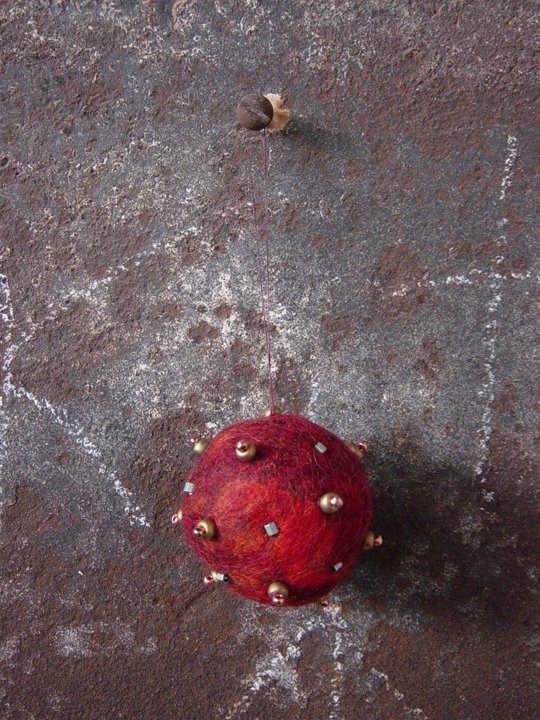
These are some of the ornaments I have made adding wool felt, embroidery floss and beads.




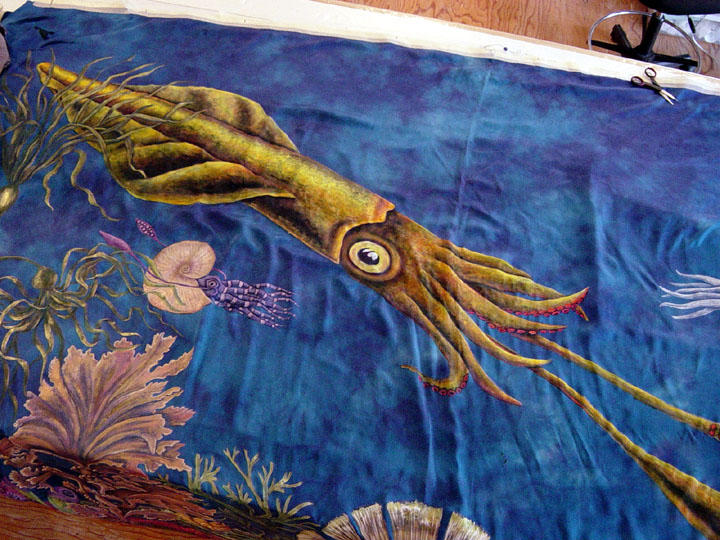
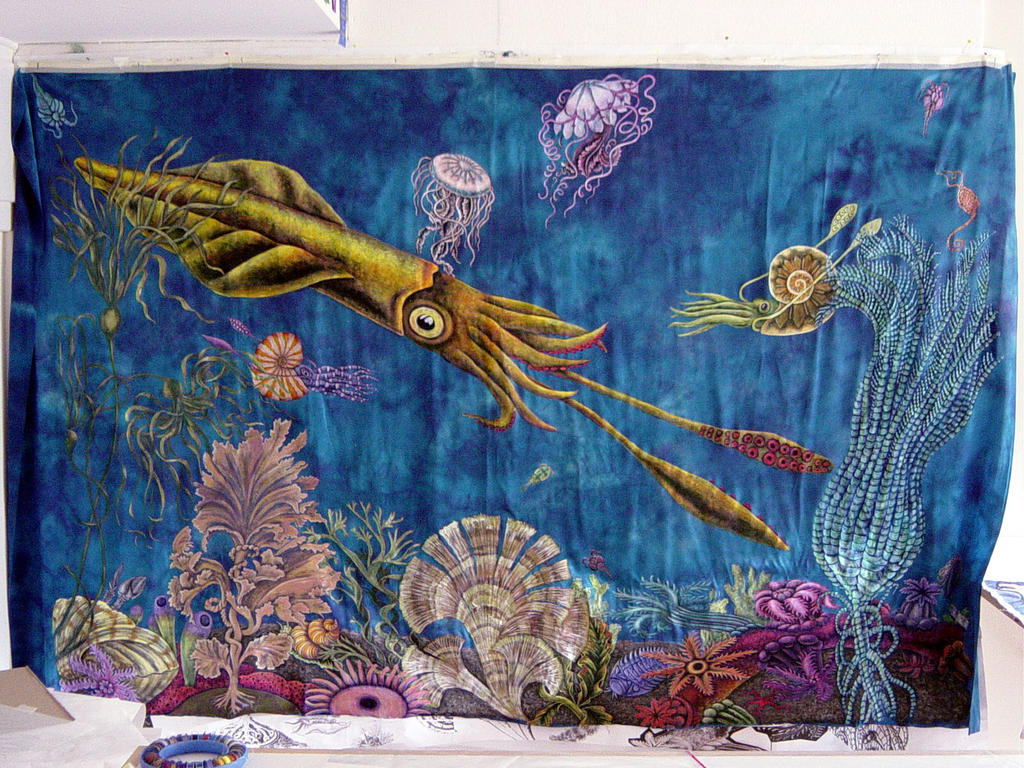
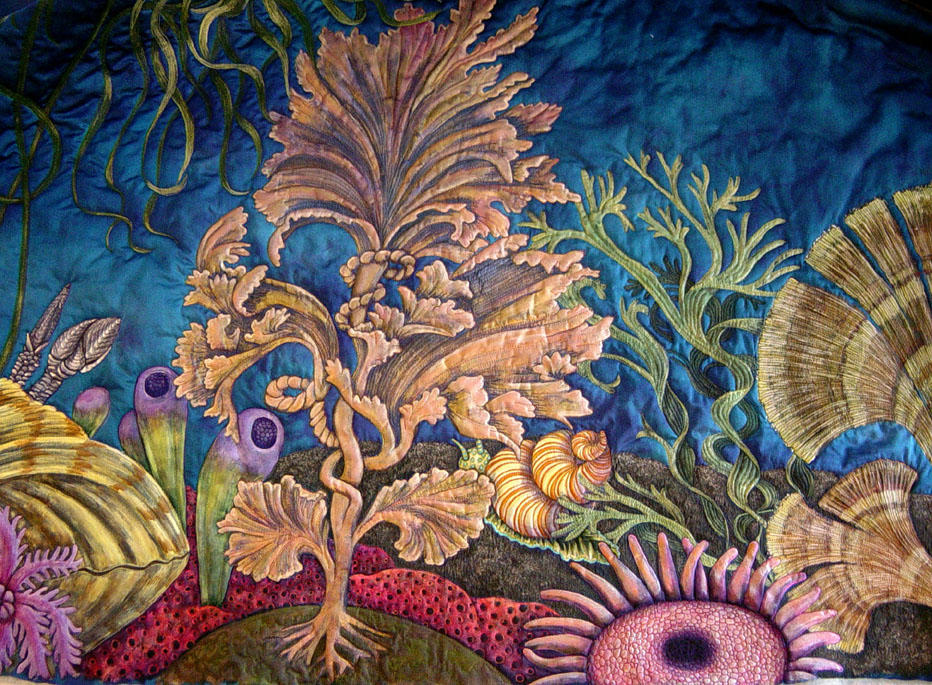


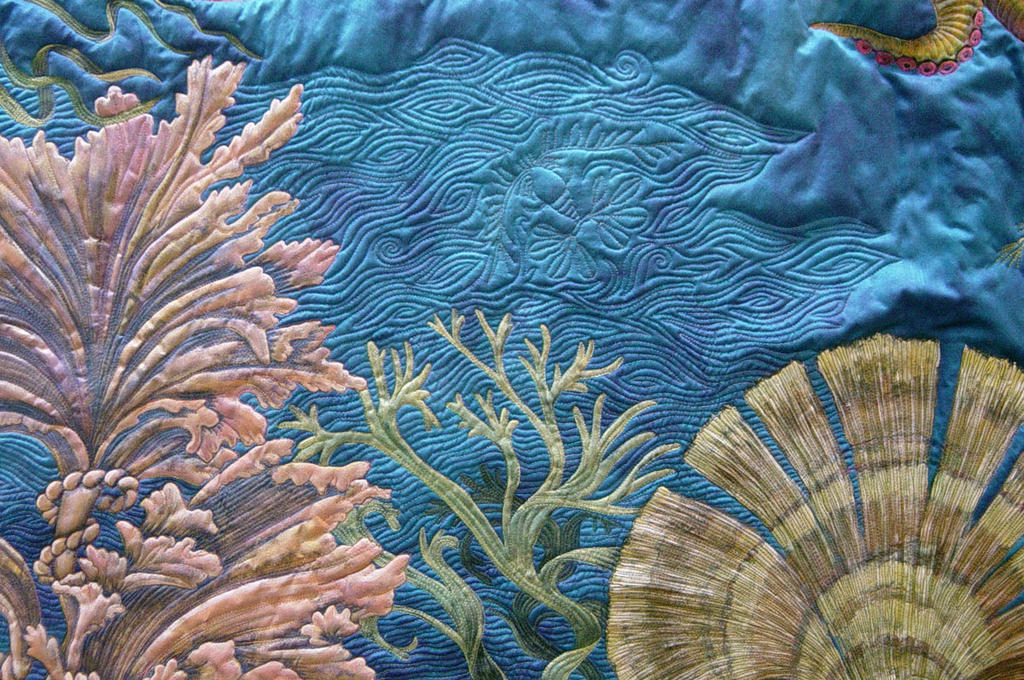



Once again I was curious what paints you use, so went clicking on your side bar...ta da...the info I was curious about....now a question...What paint brushes do you use? And do you use other things, like pencil erasers, for dots and other details?
Vicky,
I only use brushes when I paint, I find that I do not have enough control when using other things. I don't use top of the line or bottom of the line brushes, but I always buy them from an art supply. Cheap brushes loose hair, and there is nothing worse than picking hairs out of wet paint. They also can loose their points and shape pretty fast, so you loose the ability to make smooth lines. Generally I look for brushes suitable for acrylics, watercolor brushes are too soft. Oil brushes tend to be stiffer, sometimes that is a good thing but in general it is not what I am looking for. I have a lot of brushes, some I have had for 20 plus years.
The shapes and sizes I tend to use most are a flat size 3 and 2, a round size 1, and for details a 00000 and this other one says 10/0. I use those last ones for details like outlining eyes and drawing hairs on the animals in Arbol de Vida, you can see that specifically on the picture of the boar.
I have been a lurker and a fan for a long time now! Your art is amazing! You are so talented! I have a questions, when you quilt, do you use a regular sewing machine or a longarm?
I use a regular sewing machine. I have two older models; a Bernina 1630 that I have been using 13 years and an older Pfaff creative 1475 that I bought used some years ago. Each one has features that I like.
I came across this quilt while looking through a flickr group. I am a painter who recently took up quilting (we're talking RECENTLY- in the middle of my first quilt). I am so fascinated by this process and would love to know where you get your paints. THANKS!
Hi Katie,
I buy most of my paints from Dick Blick. The majority of my textile paints are from Jacquard but I also have Setacolors and some Stewart Gil paints as well. To get certain colors I have mixed the different brands together with no problems. You can sometimes find textile paints at big craft stores too.
Amazing--thanks for sharing your techniques. To get the black background, do you paint it in or work on black fabric?
Thanks, the black is painted. It would be hard to get the bright colors for the animals if it was painted on black fabric.
Brilliant work, Judy! I just had the pleasure of seeing some of your other work at the Denver Quilt festival this weekend. Thanks for sharing your process! Your work is truly inspiring.
When you paint on silk, what type of silk do you use (and where do you purchase it)?
Also, I sometimes find it difficult to quilt through fabric after it's painted. Do you have any tips around technique, needle size, and thread?
Thanks kath,
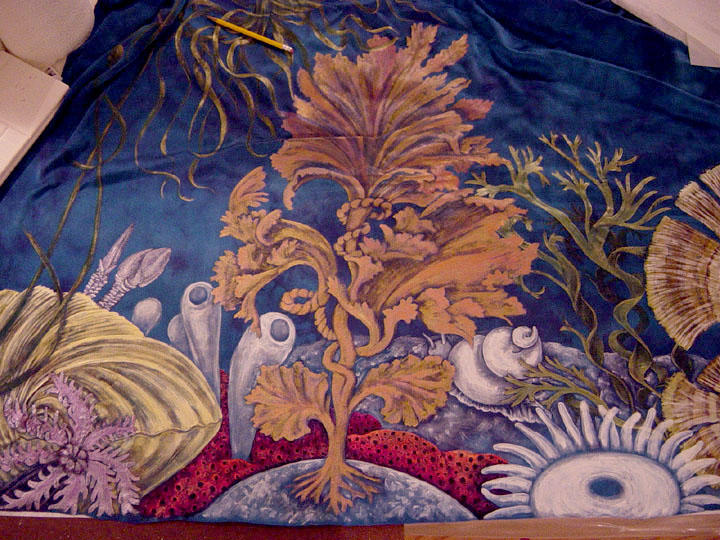
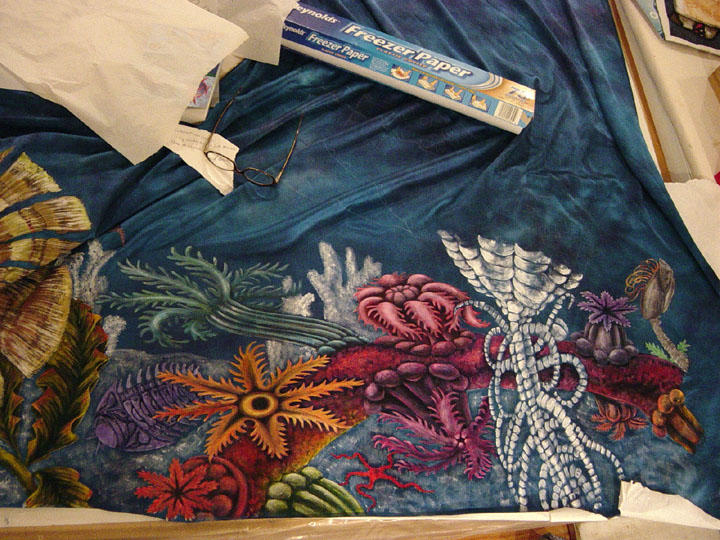
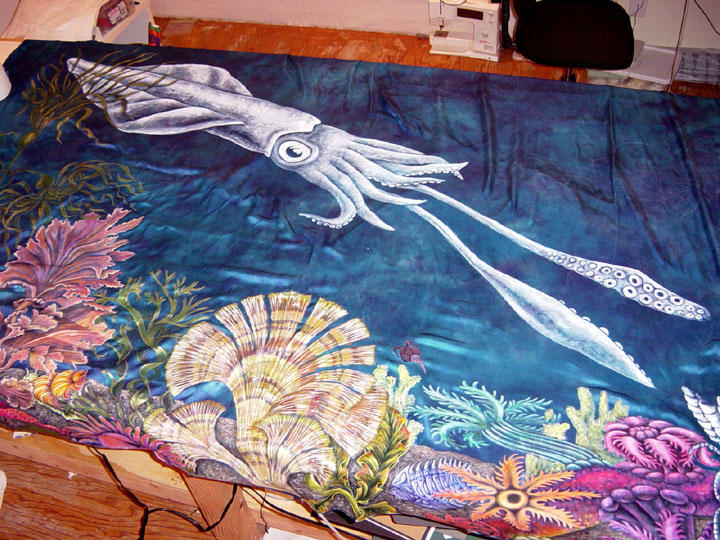
I bought 19mm silk charmuese from Dharma trading for Primordial Sea. If you ever decide to paint on silk with textile paints make sure you go to my post on the making of Primordial Sea to see some of the technical issues i dealt with to save yourself some possible frustration.
I have never had a problem sewing painted fabric. Are you using textile paints? having sharp new needles in your machine may help. I know some sewing machines can be temperamental though.
Usually I quilt with Organ brand titanium needles. Titanium stays cooler and is easier to use with specialty threads, but I like them because they do not snap off like other sewing needles if you hit the throat plate. They just bend up in a hook shape. I think they may stay sharp longer too.
The thread I use most often is Superior Rainbows. I love the colors and sheen, similar to rayon but stronger since it is polyester. I like Madeira polyneons too.